
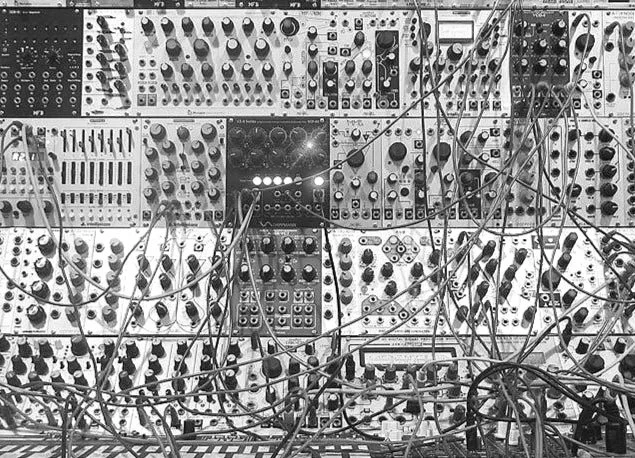
(Some of) my favourite VST plugins for music production
In the old days, making music required physical instruments, finding (the right) people to play them, and lots and lots of equipment to record and process them. Nowadays, with a few notable exceptions, most instruments can be made available from your hard drive as a ‘Virtual Instrument’. Here are some of my favourites…
A brief introduction
Back in the good old days, making music required actual physical instruments, finding (the right) people to play them, and lots and lots of equipment to record and process them. Nowadays, with a few notable exceptions, most instruments can be made available from your hard drive as a ‘Virtual Instrument’. In fact, it’s not all that uncommon for many of your favourite producers - yours truly, included - to create complete pieces of music without any physical instruments whatsoever.
But let’s go back in time a little; to a quaint era when you’d pass your audio signals from instrument or mics through a mixing desk and then onto a tape deck. As (some of) you might imagine, this required a lot of equipment and a large room, because - aside from the bulky mixing desk, you needed additional processing units for each audio signal. So, again, a lot of equipment to make music.
At the most basic level, “processing” audio signals included EQ and compression, which are the basic requirements for good sound. If you want to add space, you need reverb or delay. On top of that comes a host of other effects like distortion, phasers, flangers etc. As you might imagine (or perhaps not) these devices have a tendency to rack up and occupy entire sections of a room. At the time, all of these effects were analog hardware devices that literally “plugged in” to your mixing console (hence the term “plug-in”). Undeniably, hardware plugins have a certain kind of sonic quality that has shaped music into what we know today. To get that sound, you need to get the exact hardware and a mixing console - not to mention that big room to fit it all into!
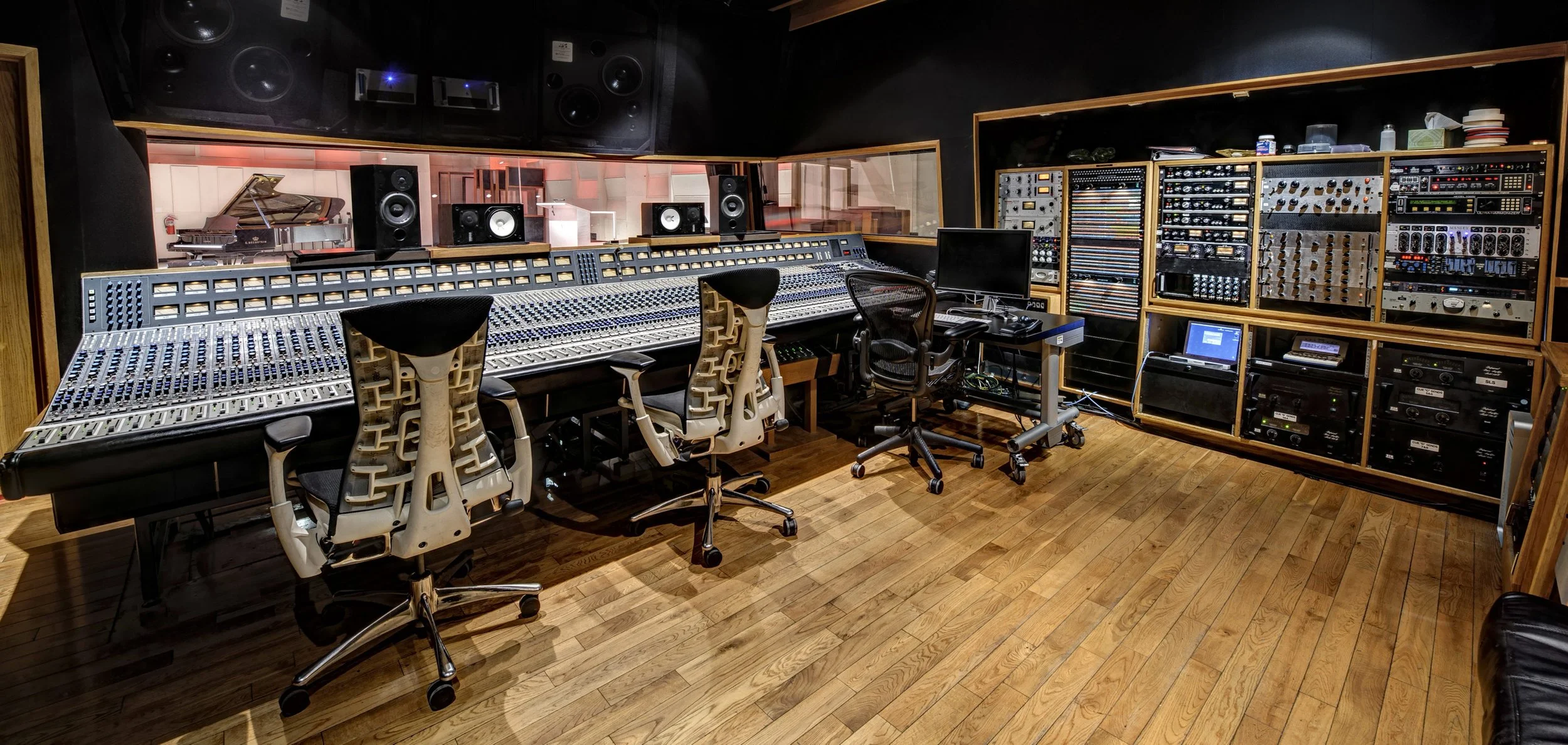
So, welcome back to the comfy home studio! The great news is that modern software plugins (VST) do a great job of emulating the sound of the devices mentioned before. Even commercial music industry studios are utilising software plugins more and more these days! In fact, the prevailing trend in 21st century music production is to capture the same “character” and “personality” that characterises vintage records and apply it to modern day music production practices. The more powerful and sophisticated these digital tools become, the more widespread music production becomes in home studios - and even bedrooms.
Coming back to the focal point of this post, there are two main categories of audio plugins: Virtual Instruments and Effects Processors - both of which I’ll get into below and hopefully give you some insight into how I achieve my production sound!
Virtual Instruments
Assuming you’re a music producer – and not just an audio engineer – virtual instruments are pretty much essential investments. The sophisticated, heavy duty ones will most likely take up more CPU than your effects processors or samples, but they really are the driving force of most modern productions. As you are most likely aware, these plugins are (sometimes) referred to as VSTi, and they are played using a MIDI controller (or with your computer’s keyboard if you’re seriously pressed for space!). Of course, you can skip these if you only plan on recording acoustic instruments, focusing on hardware or just interested in the audio engineering aspect of music production.
In most cases, your music software or DAW will already come packed with a number of (stock) virtual instruments - it’s a great idea to explore and get the hang of those before you blow your budget on expensive new stuff. That being said, here are some additional pieces of kit that I recommend checking out:
Massive X
In my humble opinion, the original NI Massive was the best VST plugin soft synth on the market for years. The completely revamped MASSIVE X, delivers some serious improvement on the much-loved industry standard. With over 170 wavetable options available and two different oscillators for you to layer your sounds within the plugin, it’s safe to say your options are very far from limited.
There’s a really cool drag and drop routing portal within the interface (that I love), which allows a seamless link to your MIDI device or other virtual instruments. Additionally, you can draw in custom modulation patterns for maximum flexibility and variety.

In terms of variety, along with hundreds of possible synth sounds, you also get a powerful sub bass modes for your oscillators. And, lest I forget, there’s an ever-growing number of expansion pack (something NI do exceedingly well) for those time periods when you’re stuck and out of inspiration!
Battery 4
Also from Native Instruments, Battery 4 is undeniably one of the most popular drum machine VSTs on the market. Featuring a a sleek GUI (something of a NI specialty) and a simple kit-making process, the Battery 4 is a percussion powerhouse that’s also straightforward to use.
Also in keeping with their regular MO, the good people at NI really make this VST stand out with the massive add-on library. No matter what genre you’re working in, you’ll hardly have any trouble finding useful and inspiring elements in the add-on kits from the expansions library.
Additionally, the NI Battery 4 boasts 128 layered cells - providing you with as much space as you could ever need. You can get creative by adding complex kits, performing sophisticated sound editing, and integrating insert/send effects.

Reaktor 6
Strictly speaking, Reaktor is so much more than a VST - it’s also a Audio Unit, RTAS and AAX plugin. Simply put, it is widely considered to be a virtual Swiss Army knife for synthesis and beat making. It is best known for its collections of ready-made synths, drum machines, sequencers, and its design feature that lets you create your own custom instruments.
Version 6 is without a doubt the most impressive and authentic sounding Reaktor version yet. Its anti-aliased oscillators sound incredible and the Zero Delay Feedback (ZDF) filters are as close as you can get to analog designs. And for those getting into modular synthesis (very fashionable these days), the Blocks engine is really exciting, as it allows you to explore in a friendly software environment.
Reaktor’s power and cutting-edge sound design capabilities have consistently and unsurprisingly garnered praise. I feel that with the sonic quality of the oscillators and filters - which now sound better than ever - Reaktor 6 is undeniably up there with the best analog emulations available. If you like designing your own instruments as much as you like tweaking readymade synths, there really is nothing else like it.

All Else Fails - Notes
My second album, entitled “All Else Fails” is going to be released tomorrow. As I wait in anticipation and reflect upon the time I spent composing and producing the album, I thought it might be interesting to share some background information on each of the tracks.
My second album, entitled “All Else Fails” is going to be released tomorrow. As I wait in anticipation and reflect upon the time I spent composing and producing the album, I thought it might be interesting to share some background information on each of the tracks.
Enjoy.
End Transmission
This was the first track to be completed - I had started working on it a couple of years before anything else on the album. To be honest, I struggled for years to find the time and mental focus to work on a second LP and, despite having a basic stylistic vision I wanted to pursue, all that I had to show for my efforts were a handful of undercooked demos and loops that I would occasionally play around with.
That all changed when the lockdowns started; I suddenly found myself with an overabundance of time on my hands, while the outside world abruptly halted and went quiet. Determined to utilise this (welcome) break in activity, I sought reclusion in my studio and began to wade through folder upon folder of projects and their variations, in search of something different. “End Transmission” was a 64 bar loop of ambient drones and harmonic washes at the time, accompanied by a rather generic “electronica” rhythm and percussion section.
Apart from establishing a melodic and thematic narrative, the other deliberate adjustments I made to my early draft concerned the instrumentation and arrangement. For example, the subtle change in time signature from 4/4 to 7/8 had a drastic impact on the phrasing of the lead melody as well as accentuating certain rhythmic patterns. Also, having decided early on that I’d like make good use of live instruments, I allowed myself plenty of time to set up my old guitar rig - properly amped, mic’ed up and tweakable - revelling in of all the magical unpredictability and nuance that’s inherent in this kind of recording process.
Too Little Too Late
Ever since I discovered William Basinski’s “The Disintegration Loops” in the mid 2000s, I’ve been fascinated by the simplicity and elegant minimalism of ambient music. These qualities can be misleading for the casual listener (or even producer!) which is why Basinski’s work is considered a landmark and “ambient electronica” on YouTube is so easily forgettable. Around the time I was writing material for the album, I came across an XLR8R interview with revered producer Rafael Anton Irisarri. There’s a very interesting section where he discusses the importance of sound sources in this genre of music and how, when properly treated and managed, they can constitute the foundations of composition.
Having modified my studio setup to be able to record everything from guitar feedback from a blasting 4x4 cabinet to the sound of the wind rustling through leaves outside my window, I made it a daily habit to capture, document, treat and store hours upon hours of recordings - the sound sources that comprise the elemental building blocks of tracks like “Too Little Too Late”.
A great deal of the arrangement and sonic architecture was a result of the feedback I would receive from Conor (Dalton), the amazing mastering engineer I worked with on this project. His comments and suggestions went a long way towards sculpting and crafting the tones, drones and textures in the track.
Ashes
Composers like John Cage and Steve Reich were frequently referenced in my classes at university (often to demonstrate unconventional or pioneering facets of modern composition) and the idea of prepared instruments had always piqued my curiosity. Sidestepping some of Cage’s more esoteric theoretical ideologies about music and upon hearing Aphex Twin’s “Drukqs”, I fell in love with the stylistic variations these sorts of techniques could add to a traditional instrument’s sound.
In more recent years, the rising popularity of contemporary classical/electronic composers such as Nils Frahm, Max Richter and Ólafur Arnalds (of whom I am an admirer) has done much to draw attention to this type of aesthetic, while inspiring a slew of like-minded artists (and inevitable imitators). At the time of writing (these notes), it seems like the norm that every self-respecting electronic music album feature at least a couple of intimate, organic-sounding piano pieces - complete with the obligatory felted hammers and pedal creaks - in keeping with the auditory earmarks of the genre. Not that there’s anything wrong with that. Awareness of the (musical) zeitgeist is healthy, as long as it doesn’t influence key creative decisions.
Despite the fact that it’s been quite a while since I practised my piano chops, I’ve never stopped harbouring (secret) ambitions of writing music for the piano - a nocturne perhaps or maybe something resembling a sonata. This was my blueprint for “Ashes”, although there were various other ideas and forces that shaped the final recording. Apart from the ubiquitous ambient noises and glitches found everywhere on the album, this track prominently features nods to all sorts of influences of mine: from film soundtracks to The Cure to Johnny Marr (whose guitar style has had a massive impact on me).
Mother
Labels like Mo Wax and Ninja Tune played a big part in developing my appreciation for electronic music - I still love the abstract hip-hop and turntablism from that era. DJ Krush, in particular, epitomised an aesthetic and inimitable style that I’ve admired for over 20 years, ever since I first listened to “Meiso”, back in the late 90s.
That’s where I wanted to start off with “Mother” - a sparse, crisp beat with minimal instrumentation and a a distinctive ambience. Along the way and after hours of trial and error, I felt the track was seriously lacking dynamics (I guess I’m too self conscious to be a minimalist!) and so I took it into more familiar and comfortable territories by adding the melodic lines from the sauntur and bansuri.
Neon Dream
I like the idea of having “break” tracks on albums - not every idea needs to be a fully formed arrangement that’s dragged out over 5-10 minutes. Apart from providing the listener with a brief reprieve, I think there’s a certain art to creating short pieces within certain parameters.
“Neon Dream” was intended to be just that - the whole arrangement is based around dense harmonic washes coming from filtering and oscillations. The moving bass line and abstract melodic phrases create the harmonic content, but in a more subtle and nebulous way.
White Cells
I desperately wanted to find space on the album for some broken beat, intelligent electronica, so I went deep into my HD folder of loops and jams to look for something I’d have fun working on. One of the coolest things about the juxtaposition of beats and rhythmic patterns in (electronic) music is the creation of polyrhythms - particularly when they’re executed properly and feel natural.
“White Cells” was just a basic, funky groove in 5/4 that I had and it quickly came alive once the bells and synths were added on top. As is often the case with these types of tracks, the chord changes and bass miraculously anchored the melodic motifs as well as adding some sense of urgency - I think this effect becomes apparent in the excellent remix by Yui Onodera, in which he has stripped everything down to the basics and focused on the harmonic content.
Avissos
“Avissos” is probably the most deceptively simple ambient track on the album - it’s basically one long jam between 3 guitars moving around suspended chords in different voicings. The challenge in sound design was to capture and give enough room for all the overtones and subtle transients to ring out clearly without creating awful resonances or clashes in frequency.
Obviously, all the guitar recordings have been heavily treated and processed to achieve a homogenous and continuous ambience while the haunting lead sound was achieved with an e-bow.
I find it really difficult to name my tracks but on this occasion the title practically leapt out at me during the first writing session. “Avissos” means “Abyss” in greek and I think the sounds are pretty evocative of one.
Womb
There have been so many different versions of this track - it’s difficult to remember which parts came from where and how they managed to all tie together. That being said, the most significant alteration that was pivotal in the development was to change the tempo to half time. This - quite expectedly - had a dramatic effect on the rhythm section and the way the existing elements felt.
In terms of style, it’s possibly the boldest track on the entire album and it really forced me to work outside of my comfort zone. For example, the (heavily processed) guitar solo at the halfway mark is the last thing I’d imagine myself recording for one of own songs. However, I fell in love with the tone that I dialled into my guitar amp and ended up using it extensively - to dramatic effect - all over the remainder of the track.
All Else Fails
This was the last track to make it on to the album and actually began life as a very different project. The majority of the sounds and samples in the recording have been taken from a sample pack I constructed a couple of years ago. At the time, my project was to create an intro track for a streaming DJ set I had been invited to perform, so I compiled a collection of atmospheric textures, pads, glitches and drones - hoping to arrange them in a manner that made sense.
With the addition of some melodic lines from a heavily effected acoustic guitar and some basic chord changes courtesy of the bass tones, what started off as a functional DJ tool, ended up taking on a new life as an arranged piece of music. I intentionally kept the arrangement linear and simple. I wanted the focus to be on the development of dynamics and the interplay between the repetitive melodic patterns - a lot like a club track (minus the more obvious rhythmic elements).
Time To Die
A lot of the music on this album was inspired by my great love of cinema - I often find that films whose stories provoke thought and explore certain themes end up resonating with me and having profound effect on my creativity.
Fans of Philip K. Dick and/or Ridley Scott will recognise the source of the titular line of dialogue and be aware of the symbolism and subtext in these works. Of course, I had absolutely no intention of referencing either or writing music that could be in any way related to the lore of “Blade Runner”, but some crucial aesthetic and musical choices are likely informed by the existential, religious and philosophical messages I’ve interpreted from the film and book.
Words to inspire you to become and stay creative during a pandemic lockdown
Write music, not dance-floor chart fodder
For a long time I’ve watched (and, to some extent, participated in) club-influenced, electronic dance music’s inexorable homogenisation and oversimplification. There are numerous explanations for this trend that I won’t go into right now but the fact remains that, to an alarming degree, the kind of music that once was conceived as an unbridled form of self-expression, rebellion and creativity has sadly degenerated into a predictable and repetitive cesspool, (overwhelmingly) serving artists seeking to validate their sizeable-yet-brittle egos or make a quick buck. And while you might excuse bloated, jaded and irrelevant scene veterans from cashing in or milking the proverbial cow, it never ceases to amaze/disappoint me when bright young talent willingly trade individuality for familiarity and creativity for conformity.
But I digress. The point I am painstakingly trying to make here is that if, ever, there has been a time to diverge, to experiment, to tinker, to wander, to dream, to create, to imagine and to (generally) do things differently - then that time is now. Never, in generations, has such a synchronous and all-encompassing “reset” button been hit across industry and society - let alone in our dark little corner of the music spectrum. Are you afraid that your latest, introspective and esoteric piece of ambient electronica won’t be “Downloaded by R. Hawtin”? Good. Are you going to lose sleep about not being on the latest Meathead House Top 100 chart over on Beatport? Even better.
Let’s just take a moment to (quickly) acknowledge a very fundamental and inescapable truth. The beat has stopped. Parties, worldwide, are on indefinite hiatus (with the deplorable exception of “plague raves”). And no, live-streaming to your fanbase (however admirable, in principle) or throwing a zoom party for your mates just isn’t the same - for many reasons. So why focus on making formulaic, cookie-cutter tracks that exist only to fulfil this (basic) function? Don’t get me wrong, there are tons of amazing records made that transcend dancefloors, genres, styles, eras and time. I certainly am not claiming that anything with a 4/4 kick and a well executed arrangement does not have any artistic merit. After all, these are the musical foundations and blueprints from which an entire genre of contemporary music has blossomed. To call it formulaic would be sacrilege, blasphemy. To denounce it as simplistic and one-dimensional; misinformed and cynical.
But think of the audience(s) you are now trying to reach. Consider the possibilities and the promise. Right now, people all over the planet have had to make enormous sacrifices and adjustments to the ways in which they access their entertainment. They may miss clubbing and dancing and going out with friends - sure - but they are also craving new music, new TV shows, new sports content, new video games and new stuff to keep them going through these tumultuous times. And these are all in competition with each other, like never before, vying for their precious attention. If you (or I), by some miracle of modern technology can make something cool and fresh and kinda awesome to get them interested, then why not? Why stop short of a breakthrough and choose to stay in some highly-templated comfort zone? Why try so hard to make music only for a (very) specific and already oversaturated demographic? Why not push the envelope a little further and see if you can create something new? Do you honestly believe that posting on Facebook about your new “hard-hitting, melodic techno bomb already supported by Carl Cox, Nicole Moudaber and Dubfire” can compete with the news that the Champions League is kicking back into action? Besides, as far as I can tell the only thing they’ve supported recently is their tour managers’ pension funds, but that’s a whole other story.
The worst possible mistake I see enthusiastic, beady-eyed, up and comers make over and over again is to subscribe to the ridiculous myth that joining some sort of collective or group is going to fast-track their success. “If I can get my track signed to Drumcode or Bedrock, things will start to happen for me”. Well, maybe. Maybe not. But guess what? There’s only one Adam Beyer and only one John Digweed and I’m pretty sure they’re not interested in clones of themselves or of any of their rosters’ artists. There are plenty of great labels of varying styles, shapes, sizes and persuasion but, at the end of the day, they are merely a platform for you to use. And, in turn, they’re going to use you. It’s part of the deal, 50% split of everything - done, get over it. The barriers to entry may often be high but, believe me, they’re decidedly not worth you trading in your individuality or identity for. Accordingly, you should always be striving to make something that is yours, and yours alone. Something that will entice the listener, challenge your peers, delight the audience and cast you in a different light compared to the vast ocean of undistinguishable sameness we’re all swimming in. If that so happens to be outside your preferred style or far removed from whatever some omnipotent, imaginary tech-house, scenester, demigod considers hip, then that’s fine too.
So, dare to stand out. Finish that dope breaks track you never thought anyone would be interested in. See what that techno track you’re working on sounds like at 135 BPM. See if you can make a piece of music without relying on beats at all! Twiddle those synth knobs in directions and combinations they’re not meant for. Make your studio machines make noises you haven’t heard or imagined before. There are no rules. There’s no right or wrong. There’s no popularity contest you’ve unwittingly entered and there’s definitely no gang of cool kids waiting to welcome you into their inner circle if you can only sound, dress and speak like them at the drop of a hat.
At the time of writing, the playing field has been levelled like never before and the odds of reaching and converting an audience are as equal as they’re ever likely to be. Why continue to travel on the road of least resistance instead of blazing a trail of your own?
Enrich your content (the right way)
So, I realize I’m opening up a veritable can of worms here but I’m aware that, for many people reading this piece, “content” is the all-encapsulating term used to describe the stuff we share online. Unfortunately, in the modern musician’s clumsy hands, this can easily also mean cringeworthy video footage of them in their studio, dancing, head-banging or wildly gesticulating to their own music, like some sort of demented primate or even spewing inconsequential, uninformed socio-political commentary; all with the noble intention/pretence of keeping their fans “engaged”. In most social media marketing circles, this is probably considered good business practice and I’m sure that these sort of “consultants” manage to convince their clients (and indeed audiences) of the added value they are offering by making us privy to this sort of bullshit.
Perhaps they’re right.
I often wonder what Miles Davis would have done if he had an Instagram account or, if indeed, Frida Kahlo would have painted as many self portraits if she was always busy trying to capture the perfect selfie. What if we were deprived of Freddie Mercury’s legendary performance at Live Aid because some idiot social media manager couldn’t take care of the Facebook livestream coding in time?
Again, I digress.
Far from being a luddite troll, I am well well aware of and all too happy to use any and all means of technology that I feel will add real value or substance to what I have to say. And so should you. Am I a bit of a purist soapbox preacher that likes to condemn gratuitous, vulgar rubbish from people who should, in theory, know better and try to set a better example? Yes. Am I completely immune to the dopamine-inducing charms of a little harmless online validation? Not quite. But here’s the thing. There’s a certain time and space for certain things. And I am convinced of the fact that making you or your art reach further and seem more interesting has NOTHING to do with you sharing your Michelin-starred culinary experiences with your audience (unless you have something interesting to say about the meal).
So then what? Well, believe it or not, the very fact that you are in a position to create art and the improbable sequence of events that have led to you having an audience of your own, likely means that some people find you interesting. Perhaps, they’re curious about how you make these wonderful sounds and would like to know a bit more. Maybe you could make a video or take some pictures of your creative process to share with them. Maybe, just maybe, they’d appreciate it if you were to supplement that killer afro house track you uploaded to YouTube with some sort of visual interpretation. I’ll tell you, it’s a hell of a lot better than relinquishing the privilege to a random YouTube channel (“playlister”, as I’ve heard them be referred to) with an unfathomable number of subscribers who is going to utterly miss the point and adorn it with a bikini-clad babe who lustfully gazes back at you like she’s inviting you for a romp by the pool. Oh, and by the way, those two advertisements you had to watch before listening to your track? Yeah, he collects that revenue instead of you, too.
But what do I know? I’ve often missed out on DJ bookings because I didn’t have enough Instagram followers and I’ve had plenty of consultants advise me (I shit you not) that I’d do much better for myself if my press shots made me look less nerdy and more sexually desirable. While this is hardly a revelation, bearing in mind how fickle and shallow our social interactions can be, there are some perks to my way of doing things. For one, I can sleep at night without tendonitis in my thumb caused by hours of furious scrolling and swiping on my phone. Secondly, I genuinely enjoy the encounters (both in the physical and digital domain) I have with enthusiasts of (my) music. And lastly, I know that I am proud and confident of the image I cultivate as an artist. There’s absolutely nothing wrong with being a Model/DJ/Foodie/Influencer/Nomad. There absolutely is a problem posing as one, as far as I’m concerned.
Part of the reason that I was encouraged to write down these thoughts, was the release of a new track of mine, called “Rust”, on a label I’ve worked with countless times in the past. So many, in fact (and without a hint of snobbery), that the whole process cycle of packaging, promo-ing, releasing, promoting, gloating and promoting (some more), made me want to delete the file off my studio computer and slit my wrists. What possible good could yet another track - coming through the same old channels, for the same fixed price, by the same people - do for this covid-infested, fearful and depressed world?
But then, it hit me. Unsurprisingly, we (the label and I) stopped short of revolutionising the current music distribution business model, but by adding value to the track itself (including a massive library of sounds in our bundle), organising an affiliated remix contest (with useful and desirable prizes), bypassing distribution channels and utilising a single platform (releasing exclusively on Bandcamp, which allowed us to control and lower our price) and creating an original, official video to accompany the music (minimizing the risk and effects of other channels hijaking the track to create their own versions), we managed to encourage dialogue, boost engagement and (I hope) actually make some people happy. And you know what? It didn’t cost a fucking cent extra.
Yeah, there will be people reading this that will say “that’s all fine and well buddy, but I don’t have that kind of platform to work with” or “stop being so romantic about this project; you could have achieved comparable results with some shiny new press pics and a targeted social media campaign”. Maybe. But what I do know? I’m just an artist and romance is in my blood.
Set some (realistic) goals
So what am I trying to say here? Surely, I’m not suggesting that you can alleviate the boredom and demoralisation of a global lockdown by messing around with a few synths and learning rudimentary video editing. But, it sure beats lying on your couch and binge-watching every series on your Netflix list (although I have absolutely nothing against people who do this). And it’s a damn sight better than pretending the music industry (and the world) is going to go back to what it was when the vaccine arrives tomorrow-ish. I don’t have a crystal ball and I can’t foresee the future but if I had to wager, I’d be very skeptical about what things will look like for all those wonderful-yet-highly-delicate threads that string together this fragile and ever-changing place we call the (dance) music industry.
I’ll tell you one thing. As we begin to emerge from our respective cells, heal whatever wounds we might have, reflect on who we are and where we are going, questions will inevitably be raised. One of the most pertinent, that speaks to the arguments made above is: what have I done with the time that has been given to me?
Discounting the inescapable fact(s) that we all need to pay our bills, make ends meet, provide for our families, pay taxes, etc I’m not in any way suggesting that this time has been an open call to reinvent oneself, lay caution to the wind, adopt a bohemian lifestyle and discover your inner David Bowie. Although, I’d totally be on your side if that’s what you wanted to do. But if art (music, in particular) is your thing - whether it’s your job or hobby - and you’re feeling confused about what to do next, you are not alone. Setting some goals definitely pays dividends and introducing some order into your chaotic scramble to remain current and relevant on a variety of different fronts might just help you accomplish more and empower you to rejoin the music world in the (not too distant) future.
Without a doubt, writing music and making something should be at the very top of your daily list. It’s no coincidence that so much great music has been released over the previous months; whether it has been inspired by the unprecedented circumstances of the lockdown or simply seeking to exploit it is irrelevant. The fact is, it just doesn’t matter. Now is the time to really home in on what you truly want to do. Explore and refine those production chops you always tell yourself you have no time for. Experiment with styles you didn’t think suited you or added anything to your preciously crafted profile. Differentiate yourself from your peers and contemporaries by doing something you can proudly own. Guess what? They’re all probably doing (or thinking of doing) the exact same thing; especially since they’re not able to brag about this amazing gig they just played or that exotic country they’ve been invited to perform in!
Enhance your content. I went to great lengths above to convey my disdain for vapid displays of narcissism that masquerade as valuable insights into an artist’s psyche. Don’t get me wrong; sharing your memories of a cool trip with your friends and complaining about the quality of wines in airport lounges are worlds apart, in my book. So am I part of some Orwellian musician social media censorship Gestapo? Should you have to perform frightful mental acrobatics trying to determine what is acceptable, useful content and what isn’t? Natürlich nicht! And I’d be lying if I said that I wasn’t still bewildered by the fact that sometimes a picture of a succulent cheeseburger garners 5 times as much engagement as a gig announcement on my own social media. Personally, I blame Mark Zuckerberg. But on a more serious note, learning a few things about how these algorithms actually work and what kind of stuff your followers are more likely to see and respond to (and why) isn’t actually so bad. In the worst case, you might find out how to target them more effectively and manipulate them into buying (into) your product and, in the best case, you might learn a few new skills. This knowledge, coupled with some measure of creativity, consideration and effort, whether it be a new DJ mix, sharing a well-written and thought provoking article that you think will resonate or even an insightful and well-scripted mention of something/someone you admire (other than yourself) are all great ways to nurture a healthy online presence that convinces people that there’s more to you than your unchecked ego and the crap you’re peddling to them.
Lastly, and without wanting to state the obvious, you need to communicate. And not just to your circle of friends or colleagues about the same old sameness you rehash day in and day out. Certainly not about how unbearable your life at home has become or how awesome your abs look after 6 months of crash course pilates at home - although both impulses are understandable. But what about those people you only speak to once in a blue moon? That promoter you innocuously contact once a year to (discretely) nag, informing him that you’re “passing through” his area, while on tour. The nerdy video editor who hooked you up with free Instagram video edits for your last EP. The overworked mastering engineer you badgered in order to have your dancefloor bombs ready by Friday because you were headlining that sick new club in town. Chances are they’ll surprised but (nonetheless) happy to hear from you - if only to check in. On the one hand, it’s good godamn business - an act of common courtesy - and on the other, there’s a slight chance they’ve been doing the same kind of personal digging as you and have some wisdom or inspiration to impart. Maybe there’s a cool collaborative project they’ve been mulling over and you’re the missing cog in their machine. Perhaps your conversation will unlock your dormant and inquisitive side, sending you down a rabbit hole of self discovery and YouTube tutorials, unveiling your hidden talent for some sort of technical wizardry that further sharpens your skill set. Hell, I spoke to a couple of writer friends a few months ago and discovered I could put together more than a resume.